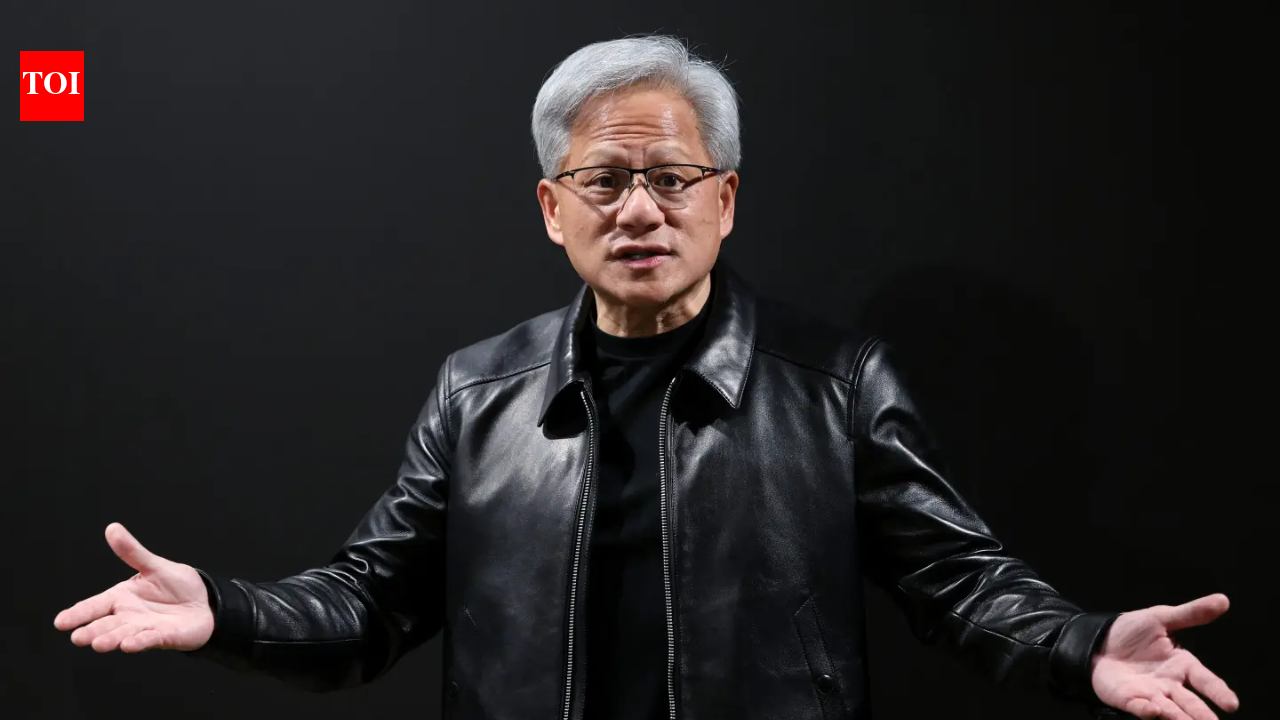
Nvidia CEO Jensen Huang backed a Seattle lab with nearly 7 million GPU hours; its new AI model designs proteins up to 10 times faster and helps tackle pollution
Reported by Times of India, not nibnow. We are not the publisher of this story, only the source is.
The new AI model can design proteins up to ten times faster, which could accelerate development of medicines and solutions for pollution, affecting health and the environment.
A philanthropic organization established by the leader of Nvidia and his spouse has awarded a substantial computing resource package to a prominent medical research center in Seattle. The grant provides the academic facility with close to seven million hours of processing capacity utilizing specialized graphics hardware. This contribution coincides with the unveiling of a cutting-edge artificial intelligence framework created collaboratively by the research group and the technology corporation. The newly developed generative system accelerates the creation of specialized molecular structures by a factor of ten, offering promising applications for environmental cleanup efforts.
GPU hours refer to the processing time of graphics processing units, which are used for high‑performance computing tasks such as training AI models. Institutes like the UW Medicine Institute for Protein Design use computational tools to create new proteins for medical and environmental applications.
- •Follow any research papers or patents released by the IPD using the RFD4‑Proteina model
- •Watch for announcements of additional Nvidia or foundation funding for protein‑design research
- •Monitor industry adoption of the open model for drug discovery or pollution‑remediation projects