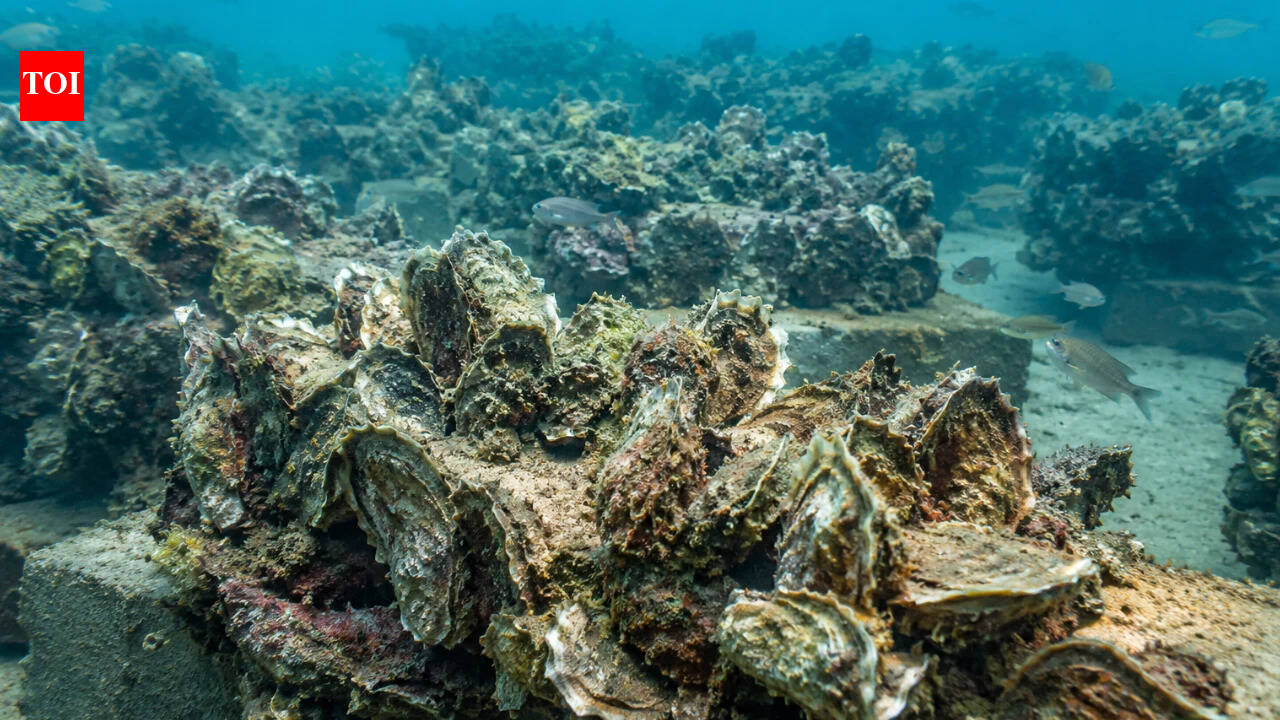
In 2022, researchers began monitoring oyster habitat restoration beneath China's Bohai Bay; by 2026, artificial reefs held 286 oysters per square metre and suspended particles were about 62% lower
Reported by Times of India, not nibnow. We are not the publisher of this story, only the source is.
The survey shows that the artificial oyster reefs in Bohai Bay are supporting a high density of oysters, indicating successful habitat restoration and likely improvements in water quality.
Scientists initiated a long-term study in 2022 to evaluate the recovery of oyster ecosystems beneath China's Bohai Bay. After four years of continuous monitoring, the artificial reef structures have demonstrated significant ecological progress. A field survey completed in March 2026 recorded an average density of 286 oysters for every square metre of the restored habitat. These findings indicate that the newly created environments are successfully supporting substantial oyster populations. The data suggests that the intervention is effectively aiding the local marine ecosystem, providing concrete evidence of biological recovery in this specific coastal region after several years of dedicated conservation efforts.
Oyster reefs act as natural water filters and provide habitat for marine life; restoring them is a common strategy to combat pollution and biodiversity loss in coastal areas like China's Bohai Bay.
- •Follow‑up studies reporting changes in water clarity or pollutant levels
- •Plans to expand artificial reef projects in the region
- •Potential effects on local fisheries and aquaculture