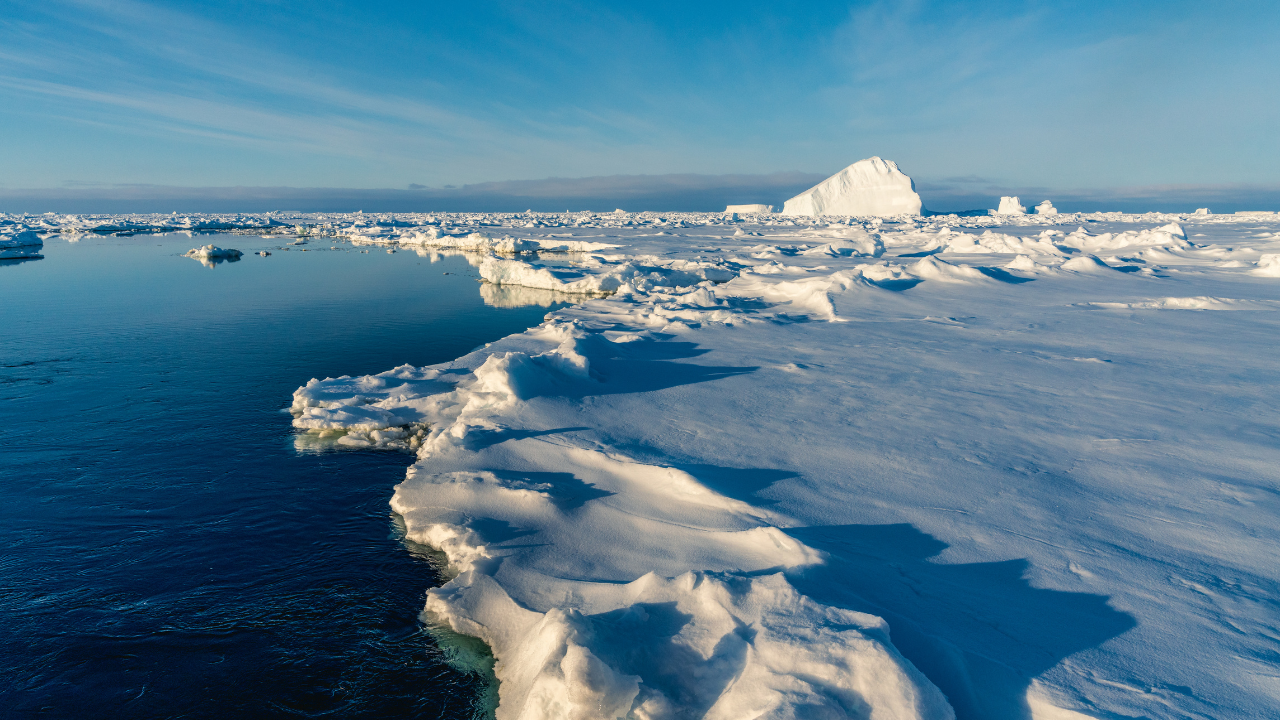
Arctic ice had been expanding for 1,000 years before reaching its greatest extent around 1960
Reported by Times of India World, not nibnow. We are not the publisher of this story, only the source is.
The study highlights that human-induced warming has reversed a natural trend of glacial growth that persisted for centuries, demonstrating the specific impact of greenhouse gas emissions on Arctic ice retreat since the 1960s.
A recent study indicates that the Barnes Ice Cap had begun expanding nearly 2,000 years ago. This expansion was attributed to cooler summer conditions that allowed ice to grow. However, rising greenhouse gas emissions reversed this trend and caused significant ice retreat since the 1960s. Researchers emphasize that human-induced warming has disrupted natural climate patterns that favored renewed glacial growth.
The Barnes Ice Cap is a significant glacial feature in the Arctic, and its historical expansion and subsequent retreat serve as a long-term indicator of regional climate shifts and the influence of atmospheric conditions on ice mass.
- •Future research comparing the rate of ice retreat in the Barnes Ice Cap with other Arctic regions to assess broader climate impacts.
- •Policy responses aimed at reducing greenhouse gas emissions to mitigate further disruption of natural glacial patterns.